
Long Stay Visa or Digital Nomad Visa: Which Is Best for Remote Work in Madagascar?
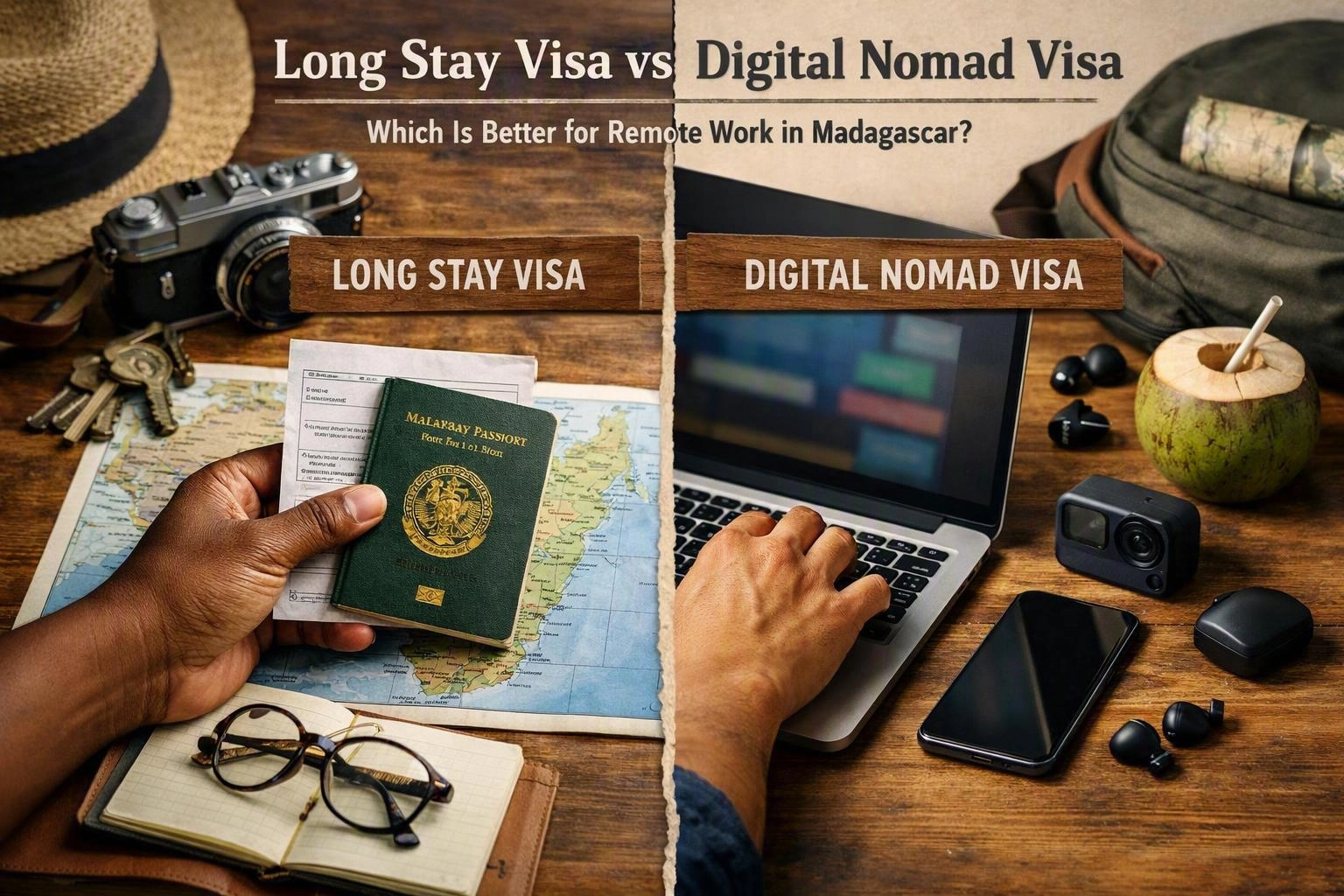
The long stay visa and digital nomad visa both allow remote work in Madagascar, but they serve different needs. The digital nomad visa gives more flexibility and easier renewal for freelancers. The long stay visa fits people who want a longer stay and a broader legal status.
Overview of Long Stay Visa and Digital Nomad Visa in Madagascar
Long Stay Visa and Digital Nomad Visa are two main legal options for remote workers in Madagascar. Each one fits different stay plans and work needs in the country.
The main difference is purpose. A long stay route often suits people who want an extended stay visa and a stronger local footing. The digital nomad permit is built for people who earn from clients or employers outside Madagascar. Both can support remote work, but the rules, paperwork, and renewal path differ.
In real life, a Long-Stay Visa Application in Madagascar may fit someone renting long term or moving with family. It can also suit people who may later switch to a residency permit. The nomad route often works better for freelancers, consultants, and online staff who want a temporary residency visa without deeper local ties.
Local rules matter here. Madagascar’s visa regulations require proof of income stability for digital nomad visa applicants. Because of that, remote workers should prepare bank records, contracts, or invoices before filing a visa application.
Key Differences Between Long Stay Visa and Digital Nomad Visa
The Long Stay Visa and Digital Nomad Visa differ mainly in cost, timing, upkeep, and fit. Each one suits a different kind of remote worker.
| Factor | Option A | Option B |
|---|---|---|
| Visa type | Long stay route / extended stay visa | Digital nomad permit / freelancer visa |
| Cost comparison | Usually higher overall because of added documents, local follow-up, and possible residency steps | Often lower to moderate at entry stage, though renewals and compliance still matter |
| Application timeline | Commonly slower due to administrative checks and broader legal review | Often faster when the file is complete and income evidence is clear |
| Maintenance | More formal permit maintenance, address updates, and renewal planning may apply | Simplified visa renewal in many cases, but income proof must usually stay consistent |
| Work authorization fit | Better for broader residency status, especially for longer settlement plans | Better for remote work performed for foreign clients or employers |
| Best for | People seeking a stable base, family relocation, or a path toward deeper local residence | Independent professionals, online contractors, and location-flexible workers |
Cost Comparison of Both Visa Options
visa application cost is usually higher for the long stay route. That file often needs more supporting documents. It may also include translation, legalization, and extra local processing. A digital nomad file can be lighter, especially if income proof and offshore work contracts are clear.
Most cases fall into a moderate range, not one fixed price. We tell clients to plan for official fees and real follow-up costs, not just the first filing.
Application Timeline and Processing Speed
The application timeline is often shorter for the nomad route. Longer residence files can move more slowly through local review. In Madagascar, long stay visa applications may take more time when officers need to check housing records or background documents.
Travel seasons can also affect timing. During busy periods, immigration counters and related offices may have heavier workloads. Early prep helps with both visa types.
Pros and Cons of the Long Stay Visa
The Long Stay Visa offers extended residency and broader legal protections but involves more steps and higher costs than the digital nomad visa.
Pros
Cons
Pros and Cons of the Digital Nomad Visa
The Digital Nomad Visa provides flexibility, faster processing, and simpler renewals for many remote workers, but it may limit duration and work scope.
Pros
Cons
Which Visa Is Better for Your Remote Work Needs in Madagascar?
Choosing between the Long Stay Visa and Digital Nomad Visa depends on your work duration, residency goals, and legal needs. Each option fits a different remote work situation in Madagascar.
If you want a flexible base for online income from abroad, the Digital Nomad Visa is often the better fit. If you want a more settled legal status, the long stay route is often stronger. Your job title matters less than your timeline, your documents, and your future plans.
Choose the nomad option if you are a freelancer, agency owner, or remote employee with stable foreign earnings. It also helps if your housing plan is simple. Choose the longer residence option if you are moving with family, planning a long stay, or may later seek another immigration permit.
Our team looks at your work style, income proof, and risk points before suggesting a path. That helps keep the visa application process clear. It also makes sure the permit matches your real plans.
Frequently Asked Questions
If you are comparing a remote worker visa with a broader residence option, we can help. We’ll help you prepare a cleaner file and cut down delays. Contact our team to discuss the right path for your move.
Welcome Mada helps applicants understand documents, timing, and local visa rules before they file.
Related Resources
How a Long-Stay Visa Application Works in Madagascar
how does long stay visa application work in Madagascar
How It WorksHow the Transformable Visa to Resident Permit Process Works
how does a transformable visa work in Madagascar
How It WorksHow the Work Permit and Long-Stay Visa Process Works for Foreign Employees
how to get work permit and long stay visa in Madagascar
What It CostsLong Stay Visa Cost in Madagascar in Madagascar
long stay visa cost in Madagascar antananarivo